Is Stress Rewiring Your Brain?
Have you been feeling off lately - tired but wired, foggy, anxious, or dealing with more headaches? This is something I see all the time.
Here’s what most people don’t realize:
Stress doesn’t just affect how you feel… it actually affects how your brain functions.
What Stress Is Doing to Your Brain (In Simple Terms)
Your brain is built to handle short bursts of stress.
That’s normal.
But when stress becomes chronic, your brain stays stuck in “fight or flight” mode.
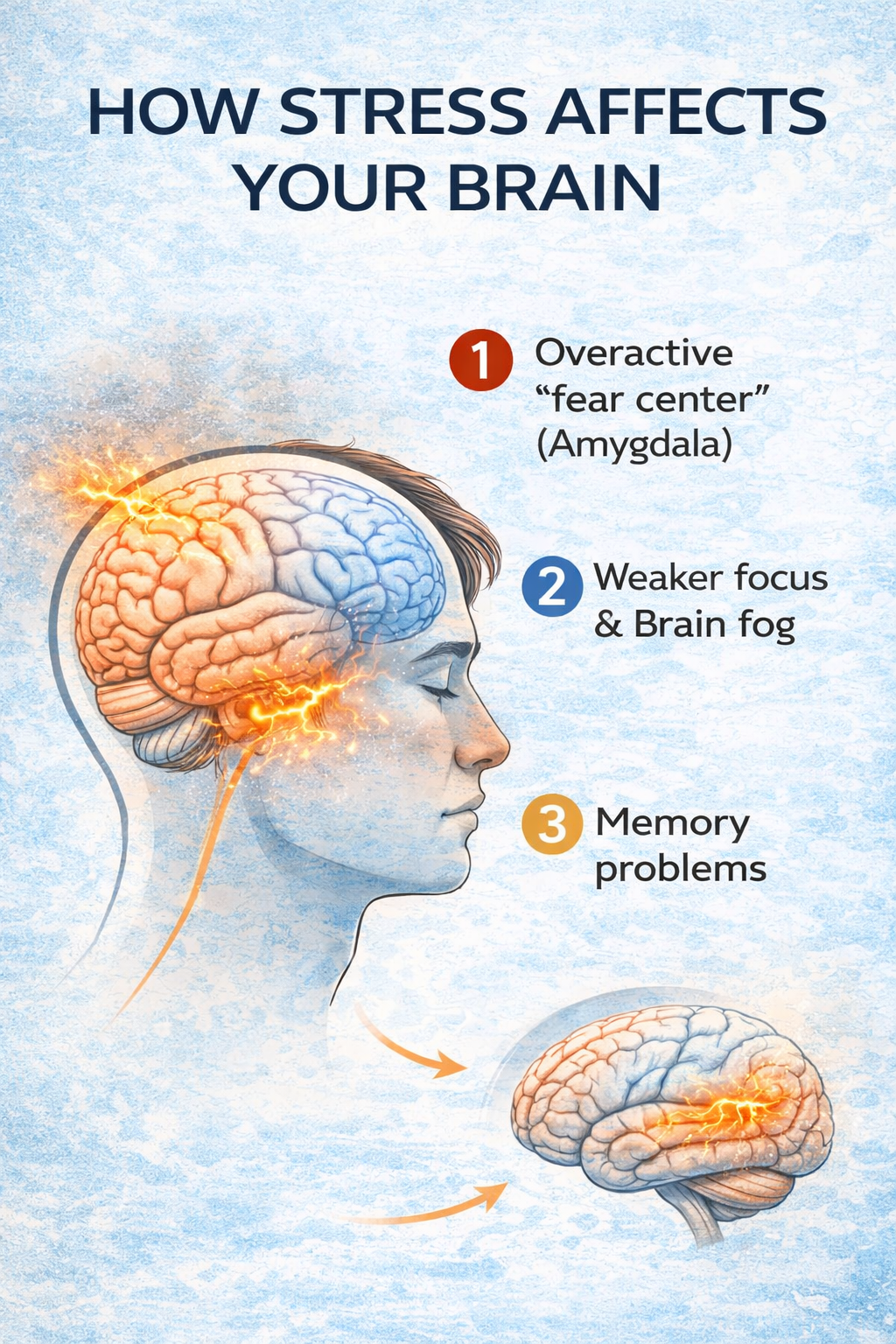
Over time, that starts to affect key parts of your brain:
The part that helps you focus and think clearly slows down
The part that controls fear and anxiety becomes overactive
The part responsible for memory and learning doesn’t work as well
That’s why stress doesn’t just feel bad, it starts showing up as real symptoms.
5 Signs Your Brain May Be Overwhelmed by Stress
1. You feel tired… but can’t relax
You’re exhausted, but your mind won’t shut off.
This happens because your body is still in high-alert mode, even when you’re trying to rest.
2. You have brain fog or trouble focusing
You forget things. You lose track of what you’re doing. Simple tasks feel harder.
This is stress affecting the part of your brain responsible for focus and decision-making.
3. You wake up anxious or on edge
Instead of waking up calm, you feel like something’s wrong.
That’s your brain’s fear center being overactive, even when there’s no real threat.
4. You’re getting more headaches or migraine
This is one of the most common things I see.
Stress:
Tightens muscles (especially neck and shoulders)
Makes your nervous system more sensitive
Lowers your threshold for pain
5. You’re exhausted at night… but can’t sleep
Your body is tired, but your brain is still “on.”
And this creates a cycle:
Stress → poor sleep → more stress → worse symptoms
What You Can Actually Do About It
This is the part that matters most:
You don’t need to do everything perfectly.
You just need to start somewhere.
1. Calm your nervous system (daily)
You have to actively tell your brain it’s safe.
Start simple:
Slow breathing (in for 4, out for 6)
5–10 minutes of quiet time
Short meditation
Even a few minutes a day can make a difference.
2. Move your body
You don’t need an intense workout.
Even:
Walking
Light exercise
Stretching
Helps reset your stress response and improves brain function
3. Fix your sleep (this is huge)
If your sleep is off, everything else gets worse.
Start with:
Same sleep/wake time every day
No screens before bed
Keep your room cool and dark
4. Take real breaks (not just scrolling)
Scrolling on your phone isn’t real rest.
Your brain needs:
Quiet
Less stimulation
Time to reset
Even 10 minutes of doing nothing helps.
5. Address tension in your body
Stress doesn’t just live in your brain—it lives in your muscles.
Focus on:
Neck and shoulder stretches
Heat
Massage or manual therapy
This is especially important if you deal with headaches.
6. Pay attention to what you’re putting in your body
Your brain needs stability.
Focus on:
Regular meals
Staying hydrated
Magnesium-rich foods
Limiting caffeine if you feel anxious or wired
What I Tell people
If you feel like your brain is overwhelmed… it probably is.
But here’s the good news:
This is not permanent.
Your brain is adaptable.
When you reduce chronic stress, your brain can reset.
The Bottom Line
You don’t need a complete life overhaul.
Start small:
Breathe better
Move a little more
Sleep better
Give your brain real breaks
Do that consistently and you’ll start to feel like yourself again
