The Biggest Migraine Prevention Update in 14 Years: What You Need to Know
The 2026 migraine prevention guidelines bring new treatment options, clearer recommendations, and a greater focus on what matters most to patients. Here's what a headache neurologist wants you to know.
By Dr. Suraj Malhan | Headache Neurologist
Migraine is an invisible neurological disease. But its impact on your life is anything but invisible.
Missed workdays. Canceled plans. Important moments with family lost to another migraine attack. For millions of people, migraine affects far more than just their head.
As a headache neurologist, I see this impact every day. And that's why the latest migraine prevention guidelines are worth paying attention to.
For the first time in 14 years, the American Academy of Neurology (AAN) and American Headache Society (AHS) have updated their joint recommendations for migraine prevention.
The 2012 guidelines focused on episodic migraine, before today's CGRP-targeting medications became available. The 2026 update also addresses chronic migraine, includes newer treatments, and emphasizes choosing medications based on individual patient needs.
But perhaps the most important change isn't about medication at all.
The guidelines state that evaluating treatment success “must be patient-centric and based on individual goals”.
In other words, successful migraine treatment isn't just about fewer headache days. It's about getting your life back.
Here's what you need to know…
When Should You Consider Migraine Prevention?
You might think preventive treatment is only for people who have migraines almost every day.
But that's not the case.
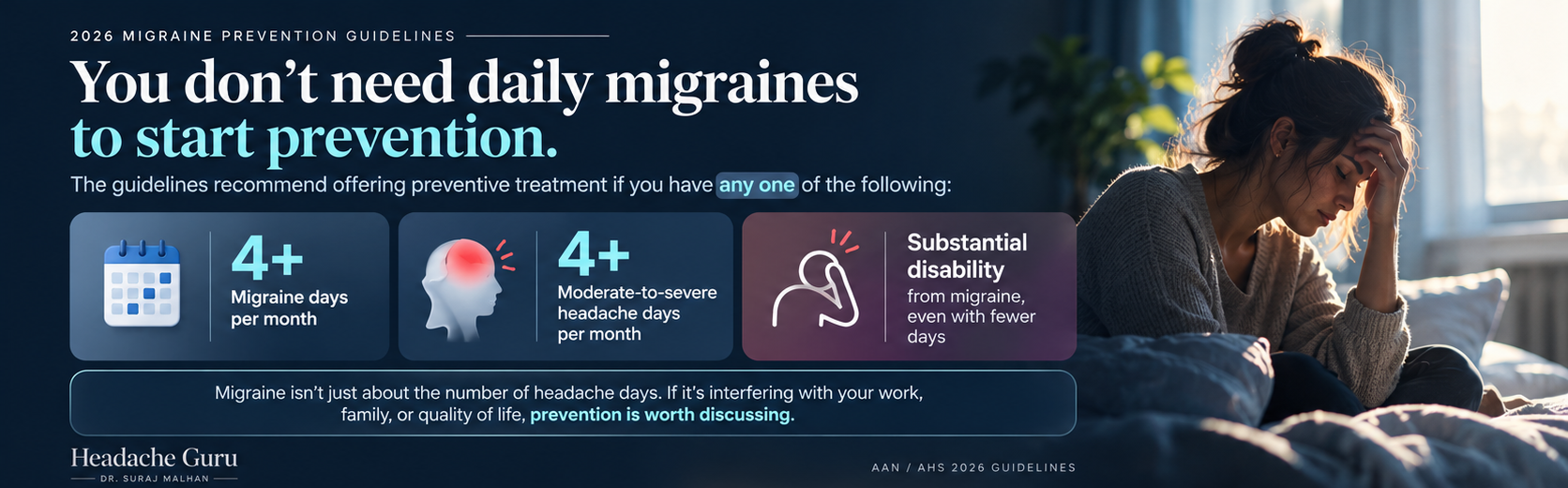
According to the updated guidelines, preventive treatment should be offered when someone experiences:
Four or more migraine days per month
Four or more moderate-to-severe headache days per month
Substantial migraine-related disability, even with fewer migraine days
That last point is especially important.
You might only experience two or three migraines a month, but if each attack forces you to miss work, cancel plans, or spend the day in bed, that's a significant burden.
The guidelines also recommend that clinicians inform every patient with migraine that effective preventive treatments exist.
Unlike medications taken to stop an attack once it starts, preventive treatments aim to reduce how often migraines occur and how much they interfere with your life.
If migraine is affecting your quality of life, it's worth having a conversation about prevention.
What's New in Migraine Prevention?
One of the biggest advances in migraine treatment has been the development of medications specifically designed to target pathways involved in migraine.
For decades, many preventive medications were originally developed for other conditions, including high blood pressure, epilepsy, and depression.
Those medications still have an important role. But today, patients have more options than ever before.
CGRP Medications Have Changed Migraine Treatment
Calcitonin gene-related peptide, or CGRP, is a signaling molecule involved in migraine attacks.
Newer preventive medications work by blocking CGRP or its receptor, helping reduce migraine frequency.
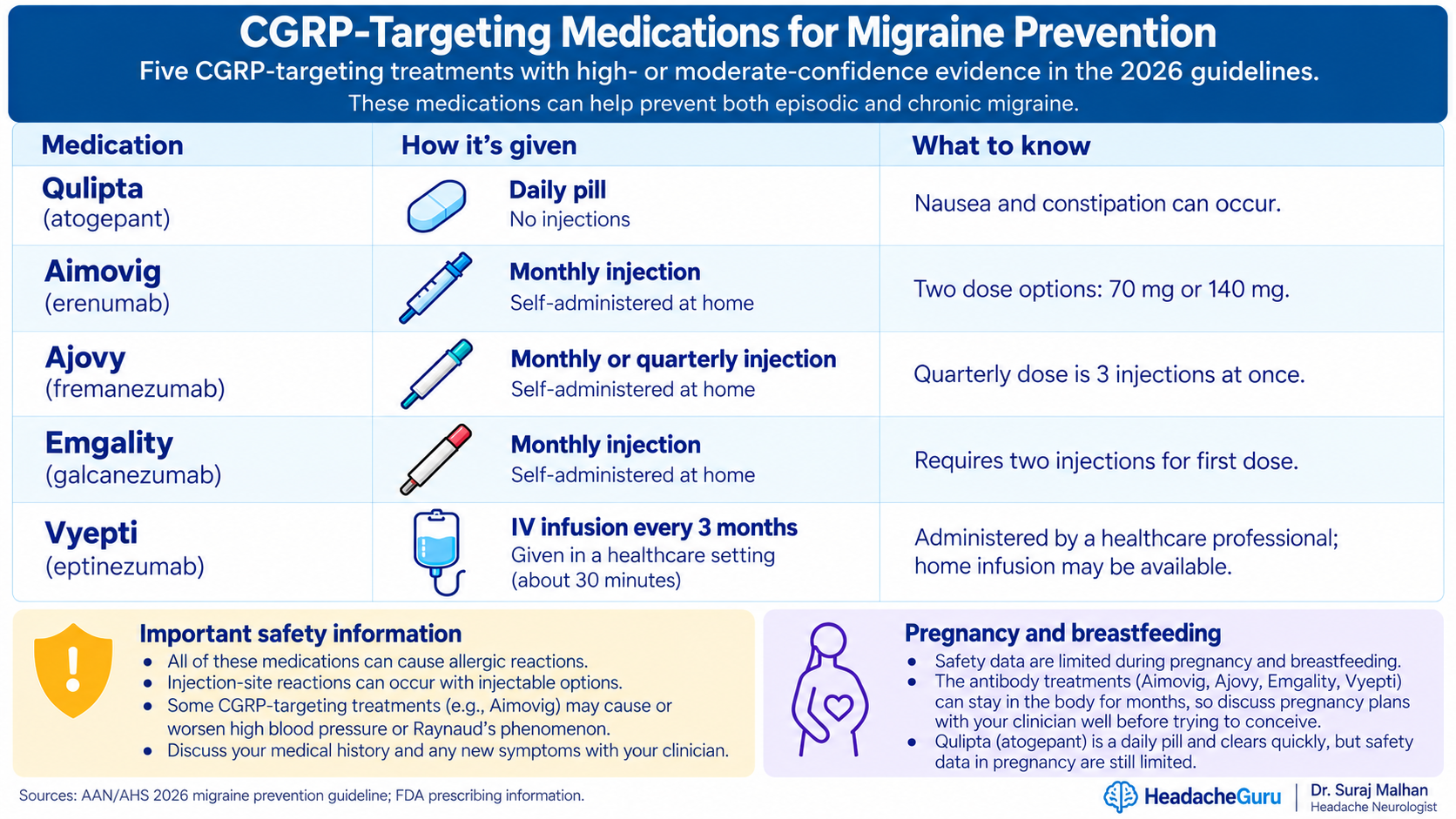
The 2026 guidelines identify several CGRP-targeting treatments supported by high or moderate confidence evidence for preventing both episodic and chronic migraine.
What about other CGRP medications?
Other CGRP-targeting medications, including Nurtec ODT (rimegepant), are also used for migraine prevention. The 2026 guidelines classified the evidence supporting rimegepant for episodic migraine prevention as low confidence.
This table is a simplified comparison, not a ranking of effectiveness. Each medication has additional safety considerations.
Are CGRP medications considered first-line treatments?
In 2024, the American Headache Society recognized CGRP-targeting therapies as a first-line option for migraine prevention, meaning patients do not necessarily need to try older medications first.
The 2026 joint AAN/AHS guidelines emphasize a personalized approach rather than establishing a strict first-line or second-line medication hierarchy. Treatment selection should consider effectiveness, potential side effects, safety, cost, and patient preferences.
Traditional Medications Still Matter
Newer doesn't automatically mean better for everyone.
Medications such as topiramate, propranolol, and valproate remain evidence-supported options for migraine prevention.
These treatments have been used for years, so clinicians have substantial experience with their benefits and risks.
But they also have important considerations.
Topiramate may cause tingling or difficulty concentrating. Propranolol can cause fatigue or lower blood pressure and heart rate. Valproate carries significant reproductive safety risks.
The best choice depends on your medical history, other medications, and what side effects you're willing or able to tolerate.
What About Botox?
For people with chronic migraine, Botox remains an important preventive option.
Chronic migraine generally means having 15 or more headache days per month, including at least eight days with migraine features, for more than three months.
Botox is administered through injections around the head and neck, typically every 12 weeks.
The guidelines recognize Botox as an evidence-supported treatment for chronic migraine. It is not an established preventive treatment for episodic migraine.
Is There One Best Migraine Medication?
Not necessarily.
The updated guidelines found that no single preventive medication has been clearly demonstrated to be superior to all others at reducing migraine frequency.
That doesn't mean every treatment works equally well.
It means there isn't one medication that's right for everyone.
Some people prefer a daily pill. Others would rather receive a monthly injection or an infusion every few months.
For some patients, avoiding cognitive side effects is a priority. For others, cost, insurance coverage, or convenience may matter more.
The best migraine preventive is one that works for you and fits your life.
Your Other Health Conditions Matter, Too
Migraine doesn't always occur on its own.
Many patients also have high blood pressure, fibromyalgia, weight-related concerns, or other conditions that can influence treatment decisions.
The updated guidelines encourage clinicians to consider the whole person when selecting preventive medications.
Migraine and High Blood Pressure
For patients with migraine and untreated high blood pressure, certain blood pressure medications may help address both conditions.
The guidelines discuss enalapril, nifedipine, and telmisartan as potential options, although the evidence supporting their effectiveness for migraine prevention is limited.
Candesartan is also used in headache medicine, but the 2026 guideline review found insufficient evidence to make a recommendation for it.
That doesn't mean candesartan is ineffective. It means the evidence reviewed did not meet the guideline's threshold for a recommendation.
Migraine and Fibromyalgia
For people living with both migraine and fibromyalgia, the guidelines recommend offering amitriptyline, because it has evidence supporting both conditions.
However, its potential side effects and interactions with other medications still need to be considered.
Migraine and Weight Management
Topiramate may be an option for certain patients with migraine and increased body weight because weight loss can occur during treatment.
However, it can also cause cognitive side effects and carries important pregnancy-related risks.
These examples highlight why migraine prevention should be individualized rather than approached as a one-size-fits-all treatment.
Pregnancy and Family Planning
Migraine prevention requires special consideration during pregnancy or when planning to become pregnant.
Certain medications, particularly topiramate and valproate, carry known risks to a developing baby.
The guidelines recommend avoiding these medications when possible in people who could become pregnant and discussing their risks before treatment.
Topiramate may also reduce the effectiveness of certain hormonal contraceptives, particularly at higher doses.
During pregnancy, the guidelines strongly recommend maximizing non-medication approaches to migraine prevention, including appropriate behavioral and lifestyle strategies.
If medication is still necessary, the benefits and risks should be carefully reviewed with a healthcare professional.
Breastfeeding also requires individualized medication review.
If you're pregnant, planning pregnancy, or breastfeeding, discuss your migraine treatment plan with your clinician rather than making medication changes on your own.
What If You're Taking Headache Medication Too Often?
Frequent use of certain medications to stop migraine attacks can sometimes contribute to medication-overuse headache.
This can create a frustrating cycle: more headaches lead to more medication use, which may contribute to even more headaches.
But here's an important point from the new guidelines:
Medication overuse should not prevent someone from receiving preventive treatment.
For patients with medication overuse, the guidelines recommend considering treatments with evidence in this population before options without comparable evidence.
These include CGRP monoclonal antibodies, atogepant (Qulipta), Botox, and topiramate.
Your neurologist can also help develop a plan to reduce excessive use of acute medications when appropriate.
The goal is to break the cycle and improve migraine control, not make patients feel guilty about how they've been managing their pain.
How Long Does Migraine Prevention Take to Work?
This is one of the most important things I explain to patients.
Preventive treatments usually don't work overnight.
And when you're dealing with frequent migraines, waiting for improvement can be frustrating.
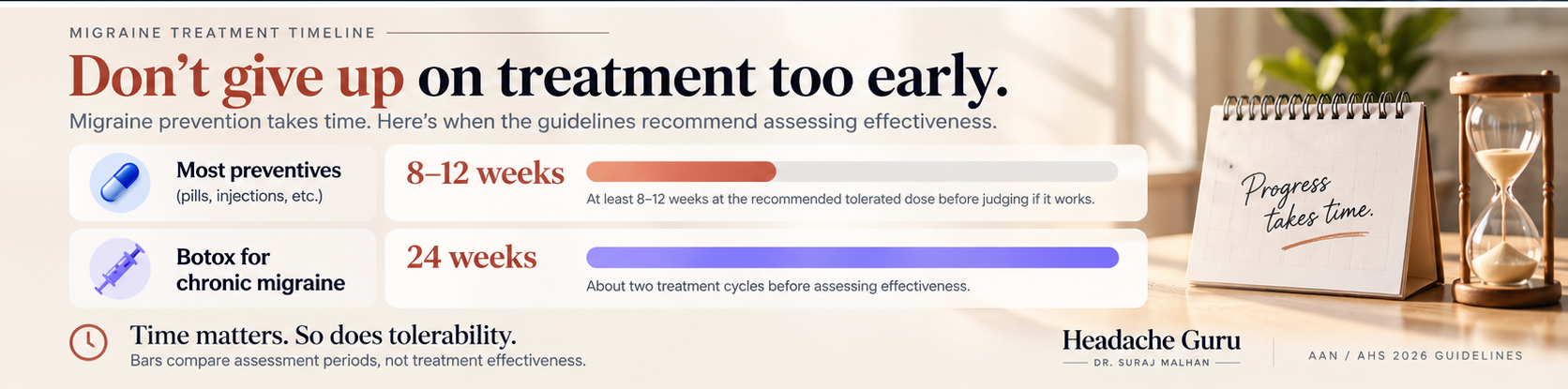
The 2026 guidelines recommend assessing most preventive medications after 8–12 weeks at a recommended, tolerated dose.
For Botox, the recommended assessment period is 24 weeks, which generally includes approximately two treatment cycles.
That doesn't mean you should continue a medication that's causing significant side effects.
If a treatment isn't helping enough or is difficult to tolerate, your neurologist may recommend adjusting the dose or considering another option.
Finding the right preventive medication sometimes takes more than one attempt.
How Do You Know If Treatment Is Working?
Reducing the number of migraine days is important, but it isn't the only measure of success.
I also ask my patients questions like:
Are you missing fewer days of work?
Can you spend more time with your family?
Are your migraines less severe?
Are you using fewer medications to stop attacks?
Do you feel more confident making plans?
These improvements matter.
For someone who previously experienced 12 migraine days a month, reducing that number to six can be life-changing.
The guidelines emphasize assessing treatment based on individual goals, quality of life, migraine severity, and medication use.
Keeping a headache diary can help you and your neurologist track those changes over time.
The goal isn't simply fewer migraine days. It's more days when migraine isn't controlling your life.
Will You Need Preventive Medication Forever?
Not necessarily.
The guidelines recommend discussing the potential benefits and risks of tapering preventive treatment after approximately six months.
But that doesn't mean everyone should stop treatment at six months.
Some patients maintain good migraine control after reducing or stopping medication. Others experience a return of frequent attacks.
The decision depends on how well treatment is working, side effects, and individual circumstances.
Any changes should be discussed with your clinician.
What About Older Adults?
Medication safety becomes especially important as we age.
Certain migraine preventives can cause dizziness, sedation, confusion, or low blood pressure.
Medications with anticholinergic effects, such as amitriptyline, may also increase the risk of urinary retention in older men.
For older adults, clinicians should carefully consider other medications, medical conditions, and the potential for side effects before choosing a preventive treatment.
What I Want Every Person Living With Migraine to Know
We've come a long way in migraine treatment over the past 14 years. Today, we have more preventive options and a better understanding of how to match treatments to individual patients.
But the most meaningful progress isn't simply having more medications available. It's recognizing what migraine takes away from people.
The missed birthdays. The canceled plans. The workdays spent pushing through pain. The uncertainty of not knowing when the next attack will happen.
As a headache neurologist, I see this impact every day.
You don't need daily migraines to deserve effective treatment.
If migraine is interfering with your life, talk with your neurologist about preventive options.
Migraine may be invisible to others, but its impact on your life is real.
And you deserve treatment that takes that impact seriously.
— Dr. Suraj Malhan
Stay Informed About Migraine and Brain Health
I translate the latest headache and brain-health research into practical, understandable information.
Subscribe to my free Headache Guru newsletter for evidence-based updates, migraine education, and insights into brain health.
Subscribe to the Free Newsletter
References
Potrebic S, et al. Pharmacologic Treatment for Migraine Prevention in Adults Practice Guideline Recommendations: Report of the AAN Guidelines Subcommittee and the American Headache Society. Neurology. 2026;107. https://doi.org/10.1212/WNL.0000000000214881
Charles AC, Digre KB, Goadsby PJ, Robbins MS, Hershey A. Calcitonin gene-related peptide–targeting therapies are a first-line option for the prevention of migraine: An American Headache Society position statement update. Headache. 2024;64(4):333–341. https://doi.org/10.1111/head.14692
Silberstein SD, Holland S, Freitag F, Dodick DW, Argoff C, Ashman E. Evidence-based guideline update: Pharmacologic treatment for episodic migraine prevention in adults. Neurology. 2012;78(17):1337–1345. https://doi.org/10.1212/WNL.0b013e3182535d20
Medical Disclaimer
This article is for educational purposes only and does not constitute medical advice. It is not a substitute for professional medical evaluation, and reading it does not establish a physician–patient relationship. Always consult your healthcare professional before starting, stopping, or changing any treatment.
